
Buying a property in VEFA means signing for a property that does not yet exist. The reservation contract, the authentic deed, the calls for funds, the delivery: each step of the process exposes the buyer to distinct risks, sometimes poorly identified at the time of signing. The French legal framework provides protection, but its limits deserve to be clearly stated.
Financial guarantee of completion in VEFA: a variable protection
The financial guarantee of completion (GFA) is often presented as the absolute safety net for purchasing off-plan. Its role is to finance the completion of the work if the developer defaults. It is mandatory for any operation in VEFA.
In practice, the GFA does not cover all damages related to a developer’s failure. It serves to complete the building or, depending on the mechanism chosen, to reimburse the amounts paid. Delay penalties, damages, or additional costs incurred by the buyer are not included in its scope.
Another rarely mentioned limit: the financial guarantee expires upon the completion of the building. If reservations remain after this date, or if equipment proves defective, the buyer will have to turn to other guarantees (perfect completion, proper functioning, ten-year guarantee) depending on the nature of the disorder. You will find information on Technique Habitat detailing these connections between guarantees.
Delivery delays in VEFA: no automatic legal penalty
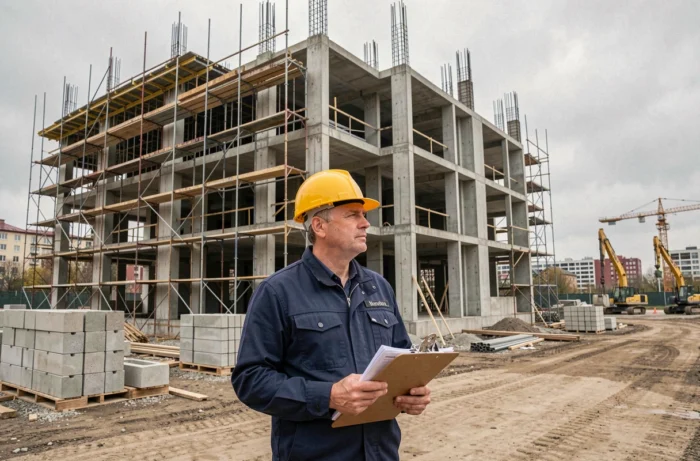
Delivery delays are the most frequently cited risk by buyers in VEFA. The causes are varied: bad weather, subcontractor failure, supply difficulties. The developer can invoke these reasons to suspend the contractual deadline, provided they can justify them.
No automatic legal penalty applies in the event of a delivery delay. Compensation depends entirely on the clauses provided in the sales contract. A poorly drafted contract, or one that does not provide for daily penalties, can leave the buyer without immediate financial recourse.
The concrete consequences of a delay can accumulate quickly:
- A double rent payment if the buyer has already terminated their previous lease, without being able to move into the new property
- Mortgage payments that begin to accrue while the property is not delivered, since the release of funds follows the contractual schedule
- A rental loss for investors who were counting on income from the initially scheduled delivery date
Checking the wording of delay clauses before signing the authentic deed at the notary remains the best defense. Vague formulations regarding legitimate reasons for postponement deserve to be negotiated or, at the very least, understood.
Calls for funds and verification of actual progress of the work
The scheduling of payments in VEFA is regulated by law: calls for funds correspond to specific stages of construction progress. The legal ceiling is set at 35% upon completion of the foundations, 70% when watertight, and 95% upon completion.
The risk is twofold. First, a buyer who does not follow the actual progress of the site may find themselves paying a call for funds when the corresponding stage has not been reached. Second, the funds paid are recoverable only in the case of judicial resolution of the contract, a long and costly procedure.
Check progress before each payment
Nothing prohibits visiting the site or appointing an expert to assess the state of progress before validating a call for funds. A buyer who pays without verifying loses their main leverage over the developer. This reflex remains uncommon, even though it constitutes a right.
VEFA reservation contract: what commercial visuals do not show
The reservation contract is signed prior to the authentic deed, often in a sales office, accompanied by 3D models and polished brochures. These marketing materials are not contractual documents. The descriptive notice attached to the contract, however, binds the developer.
The gap between commercial visuals and the descriptive notice is a recurring point of dispute. Materials, finishes, equipment: only what is stated in the technical notice is authoritative. A buyer who signs without comparing the two documents may discover at delivery a property that conforms to the contract but is different from what they thought they had purchased.
Several elements of the reservation contract deserve careful reading:
- The precise description of the property (surface area, orientation, floor, annexes), which takes precedence over any visual
- The projected price and conditions for possible revision, particularly indexing to a construction cost index
- The suspensive conditions (obtaining a loan, building permit cleared of any appeal) and the ten-day withdrawal period after signing
- The projected delivery date and applicable penalties in case of delay, if they exist

Financial stability of the real estate developer: a frequent blind spot
Checking the financial health of the developer is rarely done by individual buyers. Financial statements, delivery history, and reviews from previous buyers are accessible indicators but are seldom consulted.
A financially troubled developer may slow down the construction, cut corners on material quality, or, in extreme cases, be placed in judicial recovery. The GFA guarantees completion, not quality or adherence to deadlines. Field feedback varies on this point: some sites taken over by a financial guarantor have been completed under satisfactory conditions, while others have faced significant delays.
Consulting the commercial register, requesting references for already delivered programs, and verifying the identity of the financial guarantor before signing the reservation contract can reduce this area of uncertainty. The notary can assist with this verification, but the initiative rests with the buyer.
Purchasing in VEFA remains a commitment over several years, where time can sometimes work for the buyer (customization, new guarantees, reduced notary fees) and sometimes against them (delays, construction hazards, compliance discrepancies). Reading each clause, verifying each call for funds, and knowing the exact limits of legal guarantees are the three reflexes that separate a controlled project from a potential dispute.