A wardrobe packed with clothes worn twice, a pile of jeans that no longer fit: we all have unused items worth tens, if not hundreds, of euros. The trick is knowing what to sell, where to sell it, and at what price to make the time worthwhile.
The second-hand clothing market grows every year in France, but competition among individual sellers is also intensifying, particularly as brand outlets and vintage shops capture an increasing share of the market.
Sorting and selecting items: what really sells
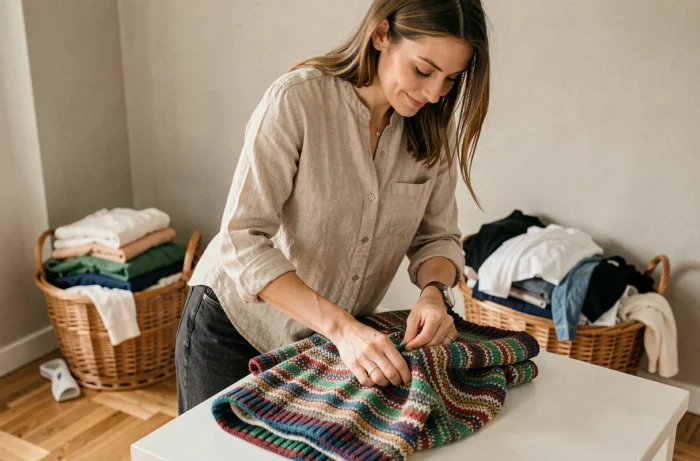
Before taking any photos, sort through your clothes. Not just a quick tidy-up, but a proper sort with resale in mind. Not every item deserves its own listing: the time spent writing a description, taking photos, and shipping a basic, unbranded T-shirt for three euros simply isn’t worth it.
The items that sell fastest share three characteristics: a recognizable brand, impeccable condition, and the right season. A wool coat listed in September will find a buyer much faster than one listed in April.
- Mid-range brands (Sézane, Arket, COS, Carhartt) find buyers faster than luxury brands, which require a longer authentication and trust-building process
- Items with no visible flaws (no pilling or stains, and working zippers) sell for more, while the rest should be heavily discounted or donated
- Bundles of children’s clothes or basics (a bundle of five plain T-shirts, for example) make it possible to clear out low-value items without having to ship multiple parcels
To sell second-hand clothes online regularly, save time by sorting items into those to sell individually, bundles, and donations from the outset.
Photos and descriptions: the real key to conversions
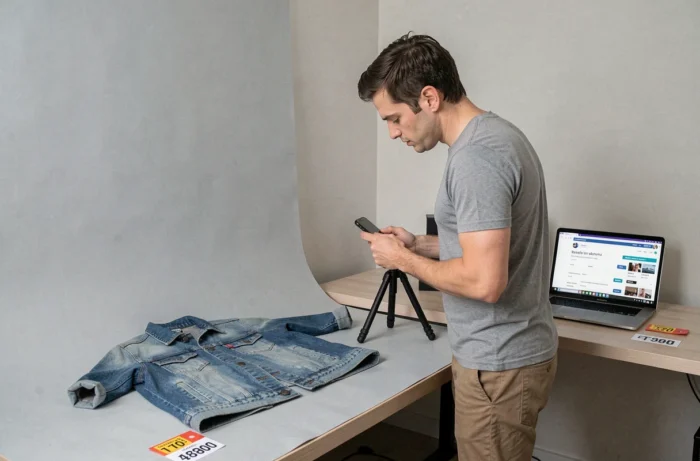
On a peer-to-peer selling platform, the photo is your shop window. A blurry shot on an unmade bed isn’t going to tempt anyone. You don’t need professional equipment—just a light-colored wall, natural light, and a little effort with the presentation.
Photograph items like a consignment shop, not a social media account
Three to five photos per item are enough: a full view, a close-up of the brand label, a shot showing the fabric (its texture and drape), and one of any flaws. Showing a snag or slight discoloration helps avoid disputes after delivery and builds trust.
Describing every flaw helps prevent returns and negative reviews. An honest description doesn’t scare buyers away; it filters out those who would have asked for a refund.
Write a description that matches what buyers search for
We rarely think of a description as an SEO tool, but platforms have their own search engines. Including the brand, exact size, color, material, and season of use increases the chances of appearing in search results.
Here’s a practical example: “Sézane wool-blend blazer, size 38, navy blue, worn twice, no flaws” performs better than “Lovely blue blazer, very good condition.” The first description includes the words a buyer is likely to search for.
Setting your selling price: balancing speed and profit
This is where most sellers either lose money or waste time. A price that’s too high can leave an item sitting for weeks, while a price that’s too low can make buyers suspect a hidden flaw.
The most reliable approach is to look for the same item—or a similar item from the same brand—that has already sold on the platform, not just listings that are still active. Active listings show what sellers are asking; sold listings show what buyers actually pay. The difference is often significant.
For sought-after brands in good condition, you can aim for between one-third and half the original retail price. Prices for mainstream brands drop faster: a quarter of the purchase price is a realistic target. The sales channel matters too: according to Refashion’s 2025 study, vintage shops and brand outlets achieve higher average prices than peer-to-peer platforms.
Factor shipping costs into your calculations to avoid surprises. On some platforms, the buyer pays for shipping; on others, the seller absorbs a commission. Check the terms before setting your final price.

Tax obligations when selling second-hand clothes
The question comes up in every discussion about peer-to-peer resale: do you have to declare your earnings for tax purposes? The DAC7 directive requires platforms to report seller information to the tax authorities once certain thresholds are reached. This automatic reporting does not mean you have to pay tax.
Occasionally reselling your own used clothes is not taxable in most cases. The situation changes if you buy items with the intention of reselling them at a profit, which counts as a commercial activity. The distinction comes down to whether the activity is regular and profit-driven.
In practice, an individual who clears out their wardrobe two or three times a year and makes a few hundred euros in sales has nothing to declare for income tax purposes. However, someone who buys clothes at vintage shops to resell on Vinted every week risks a tax reassessment if they fail to declare their income.
Choose the right time and channel to increase sales
General marketplaces (Vinted, Leboncoin) offer the largest pool of buyers, but competition is also fiercest there. An item lost among thousands of similar listings can sit unsold for months.
Using different channels can make all the difference. A physical consignment shop or brand outlet charges a higher commission, but handles listing, photography, shipping, and customer service. For branded items in excellent condition, your net earnings after commission can rival those from a direct sale—without spending an hour on each item.
Seasonality remains an underestimated factor. Summer dresses listed in May or June sell quickly, while coats find buyers from September onward. Listing an item out of season means accepting that it may sit inactive for months, reducing its visibility in the platform’s search algorithms.
Ultimately, the most profitable approach isn’t to sell as many items as possible, but to focus your energy on pieces that are worth the time. Five well-prepared sales at the right price bring in more than twenty hastily written listings that go nowhere.