
When looking at the compensation report of a CEO from the CAC 40, one often encounters a total amount without understanding its components. For Nicolas Hieronimus, CEO of L’Oréal, the structure of the 2024 compensation is public thanks to the group’s universal registration document. We can therefore break down each element and understand what triggers, or blocks, the payment of each part.
Performance criteria conditioning the variable portion at L’Oréal
Nicolas Hieronimus’s annual variable compensation can represent a maximum of 120% of his fixed salary in case of overperformance. The target is set at 100% of the fixed salary. The achievement rate retained by the Board of Directors for the 2024 fiscal year is 102.4% of the predefined objectives.
This rate results from a grid of criteria detailed in the universal registration document. It includes classic financial indicators (revenue growth, operating income), but also extra-financial criteria related to the group’s strategy.
What differentiates L’Oréal from many listed companies is the recent integration of a criterion related to the dissemination of training in generative AI among employees. For the 2025 compensation policy, specific thresholds for trained employees have been set for December 31, 2025, and mid-2026. More than half of the group’s workforce had already been trained by the end of 2025.
When analyzing Nicolas Hieronimus’s salary at L’Oréal, this technological component deserves to be taken into account: it has a concrete impact on the calculation of the variable portion.
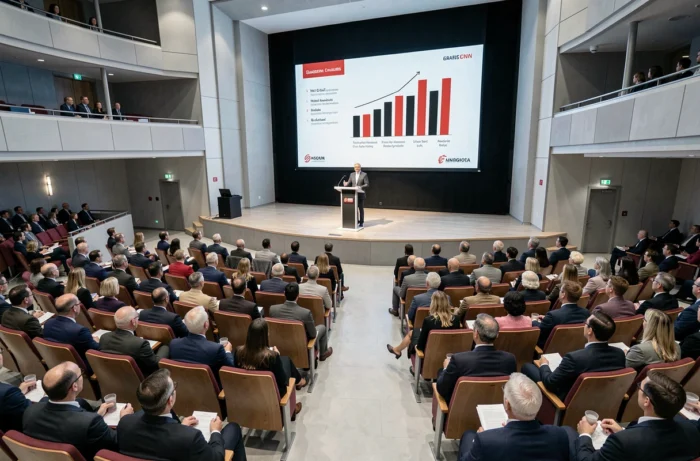
Fixed and variable compensation of Nicolas Hieronimus in 2024: the published amounts
The Board of Directors, on the recommendation of the Human Resources and Compensation Committee, determined the compensation elements during its meeting on March 13, 2025. These decisions are published in accordance with the AFEP-MEDEF Code of corporate governance for listed companies.
Here are the main components of the CEO’s compensation for the 2024 fiscal year:
- Fixed compensation: its amount serves as the basis for calculating the variable portion, with a cap of 120% of the fixed in case of overperformance
- Annual variable compensation: determined by the achievement rate of 102.4%, which places the payment slightly above the target of 100%
- Long-term elements: performance shares and multi-year plans subject to presence and performance conditions over several fiscal years
- Benefits in kind and supplementary retirement plans, governed by the compensation policy voted at the General Assembly
Without the “say on pay” vote from the General Assembly, no variable compensation can be paid. This mechanism conditions the legal validity of the payment.
Governance and shareholder voting on L’Oréal’s compensation
The “say on pay” mechanism is not just a formality. At L’Oréal, shareholders vote twice: first on the compensation policy (ex ante vote, before the fiscal year), then on the amounts actually paid (ex post vote, after the fiscal year). This double vote is mandated by the AFEP-MEDEF Code and the Commercial Code.
In practice, if the General Assembly rejects the ex post vote, the variable amounts are not paid. This lever gives shareholders a real power of contestation, even if it is rarely exercised in large capitalizations.
The role of the Human Resources and Compensation Committee
This committee makes recommendations to the Board of Directors. It analyzes the individual performance of the executive, compares the compensation with a panel of companies of comparable size and sector, and checks the alignment with the long-term interests of shareholders. The Board decides, the Committee recommends: the distinction is clear in L’Oréal’s governance.

New AMF recommendation 2026: what changes for the salary transparency of executives
On August 4, 2026, the Financial Markets Authority published a revamped version of its recommendation DOC-2012-02 on corporate governance and the compensation of executives of listed companies referring to the AFEP-MEDEF Code. This overhaul directly impacts how L’Oréal will need to present Nicolas Hieronimus’s compensation starting from the 2026 fiscal year.
Listed companies will need to provide more granular information on the extra-financial criteria used, particularly regarding their exact weighting and the results obtained criterion by criterion. For a group like L’Oréal that already incorporates objectives related to generative AI and social responsibility, the new AMF doctrine pushes for line-by-line transparency.
We can expect that the next universal registration document will detail more finely the weight of each criterion in the overall achievement rate. The direct consequence for shareholders and analysts: an increased ability to compare compensation practices among CAC 40 companies.
Comparison with other CAC 40 executives
Without precise figures for each company, it is observed that the compensation structure of Nicolas Hieronimus at L’Oréal follows the dominant pattern in large French capitalizations: a fixed salary, a capped annual variable, performance shares. The uniqueness of the beauty group lies in the weight given to non-financial criteria and in the longevity of this practice, predating recent regulatory requirements.
The salary of the CEO of L’Oréal reflects both the financial results of the group and measurable strategic commitments. With an achievement rate of 102.4% for 2024, the variable compensation is slightly above the target, without reaching the cap. The strengthening of AMF requirements in 2026 should make these mechanisms even clearer for shareholders during the upcoming general assemblies.