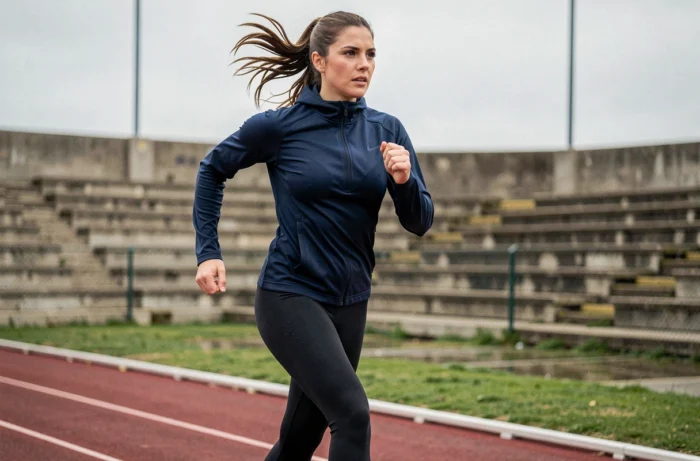
Which sports disciplines are progressing the fastest in France, and which are stagnating despite their notoriety? The landscape of French sports is transforming at a pace that traditional media rankings do not reflect. According to the 2025 National Sports Practices Barometer from INJEP, 61% of those aged 15 and over report regularly participating in a sports activity, an increase compared to previous measurements. This overall progression masks considerable disparities between families of disciplines.
Sports Licenses in France: Rising Disciplines and Those That Are Stagnating
The panorama of sports licenses over the decade 2016-2025, analyzed by Patrick Bayeux, reveals very different trajectories depending on the sports. The most publicized disciplines are not necessarily those showing the strongest relative progress.
| Category of Disciplines | Trend 2016-2025 | Examples |
|---|---|---|
| Racket Sports | Marked increase | Badminton, table tennis |
| Precision and Strategy Sports | Marked increase | Chess, climbing |
| Combat Sports | Notable progression | Wrestling |
| Trail and Nature Running | Structuring into mass participation | Trail running |
| Emerging Sports | Rapid growth | Padel, pickleball, Hyrox |
This table highlights a gap between the television visibility of a sport and its actual dynamics on the ground. Badminton or climbing attract audiences who do not identify with traditional team sports.
For everything about Fou de Sport, the discipline sheets allow for an in-depth exploration of each of these sports families with updated data.
Trail, Padel, Hyrox: Why Emerging Sports Are Attracting New Participants
Trail running continues to thrive in France with a structuring that goes beyond mere fashion trends. From local organizations to national circuits, this discipline attracts a profile of participants often coming from road running, seeking variety and contact with nature.
Padel and pickleball are changing the game in racket sports. Their technical accessibility allows for a quick entry into play, appealing to audiences less inclined to invest several months in learning before enjoying themselves. Padel, in particular, benefits from a growing number of dedicated courts across the country.
Hyrox, a hybrid competition format combining running and functional exercises, illustrates another phenomenon: the growing demand for short and measurable competition formats. Participants compare their times on standardized events, creating strong community engagement without requiring membership in a traditional club.
What Distinguishes These Disciplines from Historical Sports
- A reduced learning time: most of these activities allow participation in a competition or group training after just a few sessions
- Flexible formats: no rigid championship calendar, participants choose their events à la carte
- An immediate social dimension: padel is played in doubles, trail fosters local training groups, Hyrox relies on collective motivation
Sports Engagement of Students and Young Adults: A Changing Profile
The 15-30 age group no longer settles for a gym membership or club registration. Programs tailored to the constraints of student schedules are multiplying, driven by university association structures and online coaching.
À la carte sports activities are gradually replacing annual club commitments. A student can engage in a climbing session on Monday, a boxing class on Wednesday, and a trail outing on the weekend, without a federal license.
This mode of sports consumption is reshuffling the cards. The federations that capture this population are those offering short initiation formats, one-off events open to non-licensed individuals, and a presence on social media where practice decisions are made.
Sports Coaching and Online Programs
Sports coaching has diversified well beyond face-to-face sessions in gyms. Online programs offer structured planning for various goals: race preparation, muscle strengthening, or discovering a new discipline.
A competent sports coach adapts their programs to individual constraints, whether related to time availability, physical level, or competition goals. This personalization partly explains the success of remote coaching among young adults.
Sports Practices in France: The Gaps Between Mediated Disciplines and Practiced Disciplines
Football, tennis, and basketball occupy the majority of media space. In terms of license growth dynamics, they are not the sports progressing the fastest over the last decade.
Precision and strategy sports, such as chess, show some of the strongest relative progress. This observation challenges the image of sport as a purely physical activity and opens the discussion on the very definition of sports practice.
Climbing, boosted by its inclusion in the Olympic Games, has seen an acceleration in indoor participation. Conversely, some historical team sports struggle to renew their base of licensed participants, particularly in the intermediate age groups.
- Growing federations focus on accessibility and diversity of formats (leisure, competition, events)
- Disciplines in stagnation often suffer from a model centered on annual competition and rigid territorial networks
- Adventure and outdoor activities (trail, nature sports) attract an audience seeking an experience as much as performance
French sport is not aging; it is restructuring. The disciplines gaining ground are those adapting to current lifestyles: flexibility, rapid accessibility, social dimension. INJEP’s figures confirm a fundamental trend, not just a simple post-pandemic rebound. The next decade will reveal whether historical federations can integrate these codes or if the gap continues to widen.