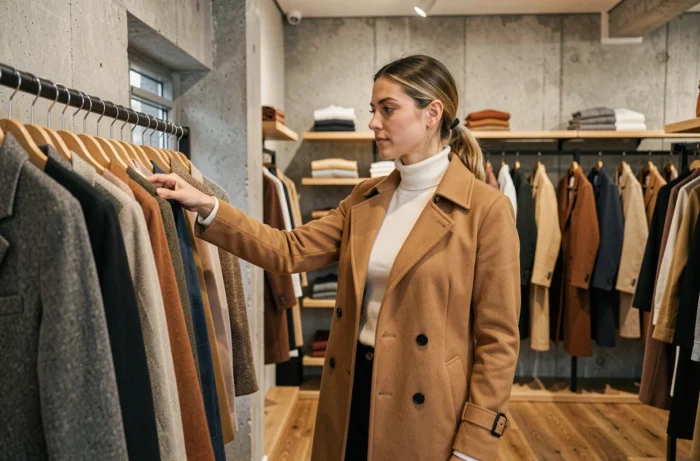
Fashion refers to a system of clothing codes that evolve in seasonal cycles, influenced by a combination of runway shows, regulations, and consumer practices. Understanding these mechanisms allows for informed style choices, regardless of budget or body type.
Textile Environmental Labeling: The Regulation Redefining Collections
For a few seasons now, fashion trends are no longer limited to colors and cuts. A structural change is altering how brands design their clothing: environmental labeling is becoming a full-fledged fashion criterion.
In France, this labeling is based on a life cycle analysis according to the PEF methodology, which covers sixteen indicators (carbon footprint, water consumption, chemicals, durability). It is already mandatory for brands that communicate the carbon footprint of their products.
The tipping point arrives on October 1, 2026: if a brand has not published the environmental score of its clothing, any individual or association can generate a default score without the brand’s consent. This reputational pressure pushes brands to integrate these criteria from the design stage of their collections.
To explore pieces and styles that take these developments into account, the fashion universe on Dekortikon gathers inspirations suitable for all profiles.
Meanwhile, the European regulation ESPR (Ecodesign for Sustainable Products Regulation, EU Regulation 2024/1781), which came into effect on July 18, 2024, covers textiles and footwear. Since July 19, 2026, large companies are no longer allowed to destroy unsold new clothing, except for safety reasons. This framework encourages brands to produce less but better, resulting in more streamlined collections and materials chosen with greater care.

Autumn-Winter Materials and Colors: Reading a Trend Beyond the Surface
Each season, trend books offer palettes and textures. Understanding the logic behind these choices helps distinguish a sustainable trend from a fleeting fashion effect.
Colors: The Palette as Language
A seasonal color does not arise by chance. It results from anticipatory work conducted by style agencies, combined with consumer research data. For autumn-winter, earthy tones and deep shades regularly return because they meet a need for visual warmth related to decreasing light levels.
The true indicator of a color that will last several seasons: its simultaneous presence in ready-to-wear, interior decoration, and tech accessories. When a shade appears in only one sector, it often remains an isolated phenomenon.
Materials: What Touch Tells About Style
Materials define the silhouette as much as the cut. The same linen blazer will fall radically differently than its felted wool version. Three families of materials structure versatile wardrobes:
- Dense natural fibers (merino wool, cashmere, brushed cotton) provide volume and structure, suitable for structured pieces like coats or pleated trousers
- Fluid materials (viscose, silk, certain recycled polyesters) create movement and work well for blouses, draped dresses, or midi skirts
- Technical textiles (water-repellent blends, high-density stretch knits) cater to urban daily use where weather resistance is as important as appearance
The choice of a material also determines the longevity of the garment. A fabric with a sufficiently dense weight will withstand repeated washes better, directly aligning with the durability criteria imposed by new regulations.
Building a Personal Style: The Capsule Method
The concept of capsule wardrobe involves selecting a limited number of compatible pieces to increase possible combinations. This is not a recent trend, but its concrete application evolves with current constraints.
The principle is based on a core of timeless basics (a well-cut pair of jeans, a neutral blazer, a quality t-shirt) around which seasonal pieces that add personality revolve. The operational rule: each added piece must combine with at least three others already present.
This approach works for all styles, from minimalist to maximalist. The difference lies in the number of seasonal pieces: a minimalist profile might add two or three per season, while a bolder profile might integrate five or six with bold prints or atypical cuts.
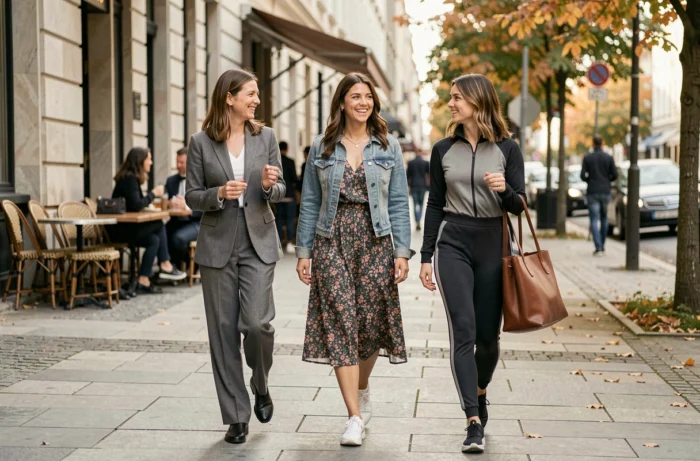
Prints and Emerging Aesthetics: Decoding Micro-Trends
Micro-trends now spread through social media before reaching stores. Among the aesthetics identified for 2026, the glamoratti movement stands out for its direct inspiration from the luxury codes of the 1980s: strong shoulders, shiny textures, ostentatious accessories.
This type of micro-trend has a limited lifespan, usually two to three seasons. Integrating it in moderation (one accessory, one statement piece per outfit) allows one to enjoy it without rendering the entire wardrobe obsolete.
Prints follow a similar logic. Floral or geometric patterns return in cycles, but their scale (small print versus large print) and their medium (dress, shirt, pants) vary enough to renew their perception.
- Small-scale prints (liberty, micro-checks) easily integrate into a professional or everyday outfit
- Large-scale patterns (oversized flowers, wide stripes) function as a centerpiece of an outfit, with the rest needing to remain understated
- Animal prints (leopard, zebra) oscillate between classic and bold depending on the chosen color: natural tones remain discreet, while fluorescent versions signal a strong statement
Environmental labeling and the ban on the destruction of unsold items also modify micro-trends. Brands that produce in limited quantities make certain pieces less accessible, accelerating the use of the second-hand market to capture a specific style. Fashion for all styles now relies as much on understanding distribution channels as on choosing a seasonal color.