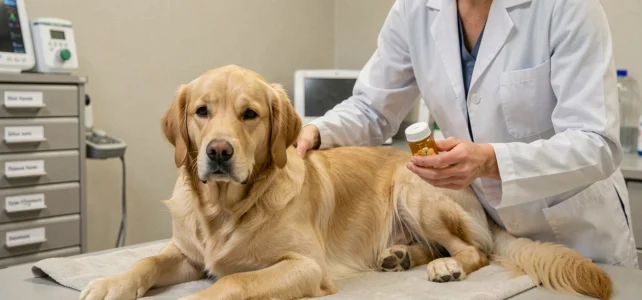
Gabapentin is one of the molecules that veterinarians are increasingly prescribing for dogs, well beyond its initial indication for epilepsy. An anticonvulsant developed for human medicine, this drug has established itself in veterinary practice for its analgesic and anxiolytic properties. Its usage profile has significantly evolved in recent years, which justifies taking stock of what is known, what remains debated, and the precautions that should not be overlooked.
Gabapentin for dogs: an adjunct, not a universal painkiller
One of the most common misunderstandings concerns the positioning of gabapentin in the therapeutic arsenal. Recent syntheses emphasize its role as a supplement in pain management, rather than a first-line analgesic. Its effectiveness is primarily documented for neuropathic pain, nociplastic pain, and situations of central sensitization of the nervous system.
In contrast, for isolated acute orthopedic pain (fracture, sprain), gabapentin alone shows limited interest. It is then combined with other molecules (non-steroidal anti-inflammatory drugs, opioids) in a multimodal approach. This nuance is rarely clarified in public content, which sometimes presents gabapentin as a standalone solution for osteoarthritis or disc herniation.
An article dedicated to gabapentin in dogs and other animals details the various situations where this molecule is involved in a veterinary protocol.
Anxiety and veterinary visits: an expanding use
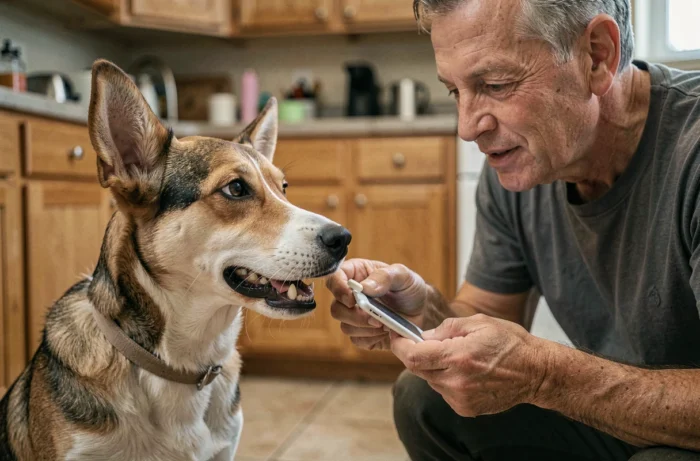
Beyond pain management, gabapentin is increasingly prescribed to reduce anxiety related to care. Transport, grooming, clinical examinations: certain situations generate intense stress in dogs, sometimes to the point of making the consultation impossible without sedation.
Gabapentin offers an interesting alternative to classic sedatives in these contexts. Administered a few hours before the stressful event, it reduces the dog’s reactivity without causing deep sedation. Field reports vary on this point: some practitioners report marked effectiveness, while others observe very variable results depending on the individual.
This variability in response complicates the standardization of the protocol. The dog’s temperament, weight, age, and medication history all influence the outcome achieved.
Risks associated with human formulations containing xylitol
A safety point deserves particular attention. Some liquid formulations of gabapentin intended for human use contain xylitol, a sweetener highly toxic to dogs. Ingestion of xylitol can cause severe hypoglycemia, even liver failure.
The risk of error exists when an owner obtains gabapentin from a human pharmacy without checking the exact composition of the product. Any prescription of gabapentin for a dog must be accompanied by a verification of the list of excipients, and ideally go through a veterinary formulation or an adapted magistral preparation.
- Systematically check that the formulation contains neither xylitol nor sorbitol before administration
- Prefer capsules or tablets over liquid suspensions of human origin
- Ask the veterinarian for a prescription specifying the dosage form suitable for the dog
Discontinuation of treatment and monitoring in older dogs

Sudden discontinuation of gabapentin after prolonged use poses a well-identified clinical risk. A too-rapid withdrawal can trigger seizures, even in dogs with no prior history of epilepsy. Withdrawal should always be gradual, with a tapering off over several days to weeks depending on the duration of treatment.
In older dogs or those with renal insufficiency, monitoring should be intensified. Gabapentin is primarily eliminated by the kidneys. When renal function declines, the molecule accumulates in the body, amplifying side effects.
- Excessive drowsiness and prolonged lethargy, especially in the first few days
- Loss of coordination (ataxia), risk of falls in large dogs
- Occasional digestive disturbances (diarrhea, vomiting)
Regular blood tests, including renal parameters, allow for dosage adjustments over time. A dog on long-term gabapentin requires structured veterinary follow-up, not just a prescription renewal.
Gabapentin and chronic pain: what the data allows us to say
Gabapentin is frequently associated with the management of canine osteoarthritis, one of the most common chronic conditions in aging dogs. Available data suggest a real benefit on the neuropathic component of arthritic pain, which persists even after inflammation is reduced.
The available data do not allow for a conclusion on the effectiveness of gabapentin as the sole treatment for arthritic pain. The multimodal approach remains the reference: anti-inflammatories, functional rehabilitation, weight management, and, if necessary, gabapentin as a supplement.
The question of the optimal duration of treatment remains open. Some veterinarians maintain gabapentin for several months, while others prefer limited courses with regular reevaluation. This lack of consensus reflects the absence of long-term studies specifically conducted in dogs.
Gabapentin occupies a useful but circumscribed place in the canine veterinary pharmacopoeia. Its effectiveness largely depends on the clinical context, the rigor of follow-up, and vigilance regarding the formulations used. A medication that works well in an adapted protocol, but that does not replace precise diagnosis or regular veterinary support.