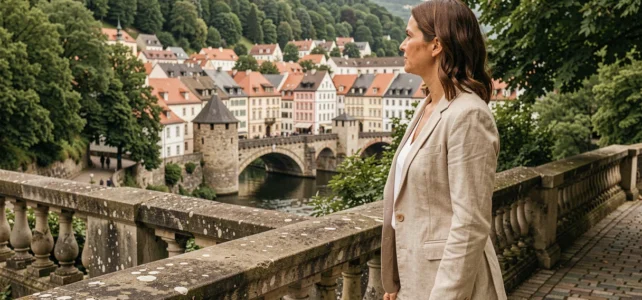
Luxembourg is rarely explored as one might expect. Behind the financial façade and the Bock casemates, the country has recently structured an offer oriented towards slow tourism, micro-neighborhoods, and niche events that change the game for travelers already familiar with the region.
Slow tourism in Luxembourg: an offer strategy, not a slogan
The capital of Luxembourg is now promoting a slow visit logic, on foot or by bike, with marked routes leading to urban green spaces often overlooked by traditional circuits. The “green oases” highlighted by Luxembourg City Visit reflect a real repositioning: slowing down tourist flow to redistribute it to less saturated areas.
We recommend approaching the city from its outskirts rather than the historic center. The Pétrusse valley, the Kirchberg plateau near the parks, or the banks of the Alzette in Clausen offer walking sequences where tourist density drops significantly. This type of itinerary can be effectively planned by consulting your Travel Guide before departure, to identify the least frequented entry points.
The self-service bike (vel’OH!) allows you to connect these green pockets without going back through the congested routes. However, the city’s topography, with its marked elevation differences between the upper and lower town, makes some sections demanding. Prefer electric bikes available in the network.
Stay in Luxembourg City by neighborhoods: going beyond the duo of Ville Haute and the casemates
Luxembourg City is organized around 24 neighborhoods with distinct atmospheres, a network that general public guides almost always reduce to three or four names. Exploring Luxembourg differently involves a neighborhood-by-neighborhood reading, each with its own codes.
Clausen and the Grund: life below
Clausen concentrates a scene of bars and restaurants set in former industrial buildings, by the Alzette. The Grund, right next door, retains a more residential and calm character. The contrast between these two micro-zones, separated by a few hundred meters, illustrates the granularity of the Luxembourg offer.
Gare and Bonnevoie: cosmopolitan Luxembourg
The Gare district remains underestimated. Yet it is here that the widest culinary diversity of the city is concentrated, with Portuguese, Cape Verdean, and Balkan tables that do not appear in any Tripadvisor ranking. Bonnevoie, bordering it, offers neighborhood markets and a vibrant community life.
A stay of two to three nights is enough to cover four or five neighborhoods at a pace that allows time for observation. We advise against grouping all visits into a single marathon day, a common pitfall of organized excursions from Brussels.
Niche events and local traditions in Luxembourg
Competitors list flagship events (Schueberfouer, national holiday). However, the less visible urban traditions deserve a planned detour, as they provide access to a cultural layer otherwise inaccessible.
- Éimaischen: traditional pottery market held on Easter Monday, centered around terracotta whistles (Péckvillercher). One of the few events where Luxembourg craftsmanship is showcased without tourist filters.
- Buergbrennen: ritual fires organized in municipalities on the first Sunday of Lent. Each village manages its own bonfire, making the experience very local and not standardized.
- Pianos set up for public access in the streets of the capital during the beautiful season transform certain squares into improvised stages. A light, free format that changes the atmosphere of entire neighborhoods.
The Schluechthaus (former slaughterhouse converted into a cultural space) schedules intergenerational activities and niche events absent from traditional tourist agendas. Monitoring its programming a few weeks before your stay helps avoid missing out on slots that are often fully booked.
Nature excursions outside the capital: Mullerthal, Moselle, and Luxembourg Ardennes
Luxembourg outside the city is structured around three nature hubs that cater to different expectations.
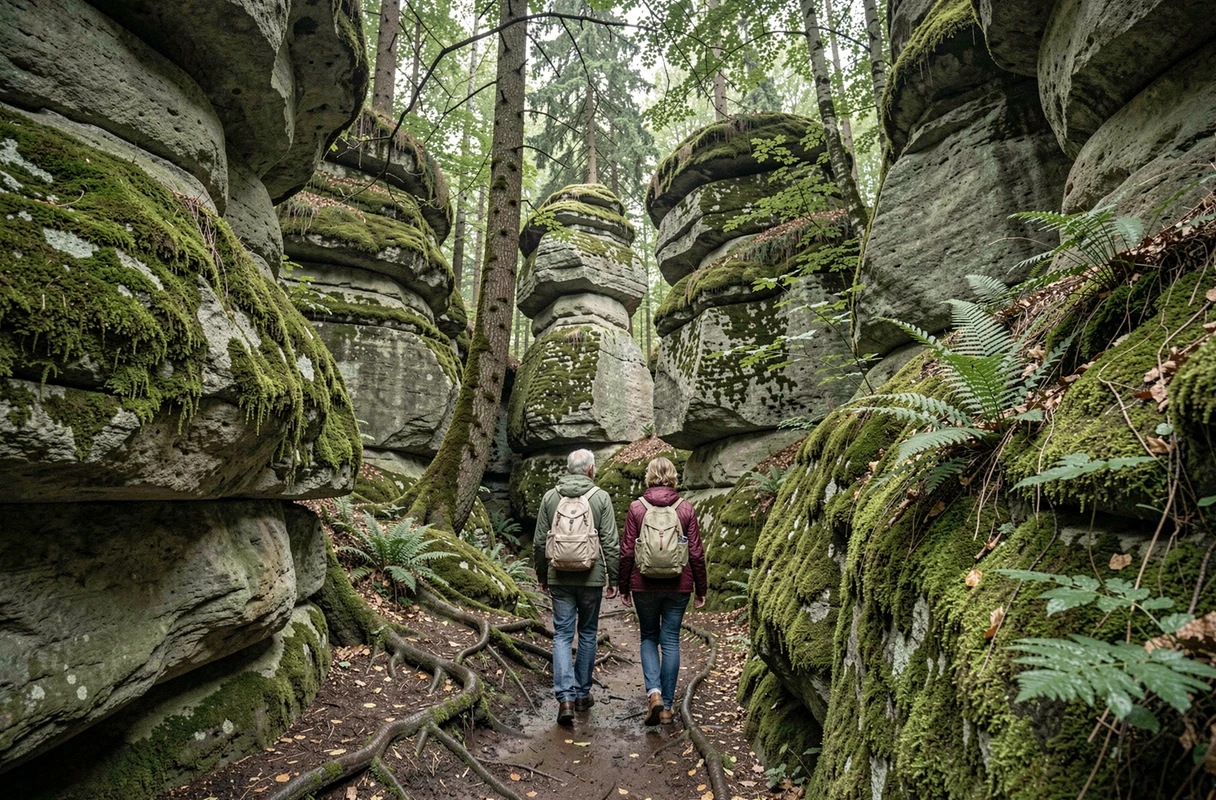
The Mullerthal Trail, nicknamed “Little Luxembourg Switzerland,” offers sandstone rock formations on marked paths. The terrain is technical in places, with narrow passages between rocks that require hiking boots. It is not a family walk throughout its length.
The Luxembourg Moselle valley lends itself to a completely different register: tasting crémants and dry white wines (auxerrois, rivaner) directly at the wineries. The estates there practice significantly lower prices than those in neighboring French wine regions, for comparable quality cuvées.
The Luxembourg Ardennes (Éislek) attract an audience in search of deep forests and steep valleys. The draisine at Minett Park in Fonds de Gras allows you to traverse former railway lines over a few kilometers, a fun activity suitable for families that combines industrial heritage and outdoor enjoyment.
- Mullerthal: technical hiking, rock formations, plan for a minimum of half a day per loop
- Moselle: wine tourism, wine villages, slow pace
- Éislek: forests, draisine, horseback riding, extended nature stays
Free transport and stay logistics in Luxembourg
All public transport in the country is free (bus, tram, train in second class). This system, unique in Europe on a national scale, changes the logistics of a stay: it becomes rational to place your luggage in a single accommodation and radiate daily towards points of interest without calculating transport budgets.
The tram in Luxembourg City serves Kirchberg (Philharmonie, Mudam, MNHA) and the center. Trains connect the capital to Ettelbruck, Clervaux, or Remich in less than an hour. For hikes in Mullerthal, regular bus lines serve the main trailheads.
A stay in Luxembourg that combines neighborhoods of the capital, local traditions, and nature excursions can fit into three to four days without forcing the pace. The free transport and the compactness of the territory make this format particularly efficient for travelers based in France, Belgium, or Germany.