
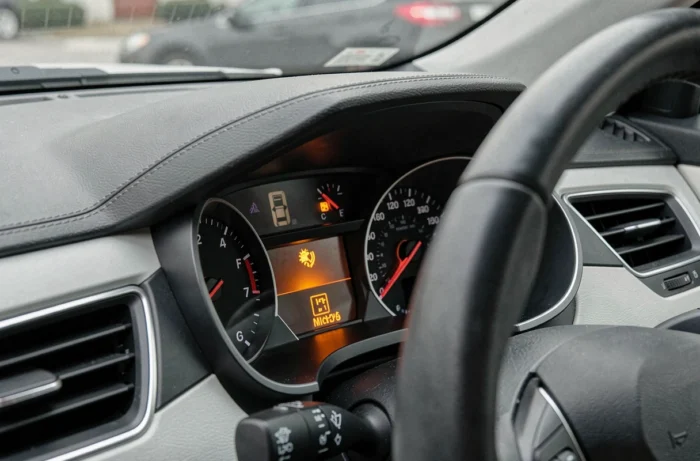
The orange engine light that comes on just after refueling indicates that the computer has detected an anomaly in the fuel supply or pollution control circuit. This situation, common and often not immediately serious, warrants a methodical check to avoid exacerbating an underlying problem.
EVAP Circuit and Fuel Cap: The Most Underestimated Cause
The evaporative emission control system (known as the EVAP circuit) keeps the fuel tank under slight controlled pressure. When the fuel cap is not tightened properly or its seal is worn, a vapor leak occurs.
The computer interprets this leak as a fault in the pollution control circuit and turns on the engine light. On gasoline vehicles, this is the primary cause of the light coming on after refueling.
Before any intervention, simply reopen the cap, check that the O-ring is not cracked or flattened, and then tighten it until you hear a solid click. On some models, the light will turn off after two or three starting cycles if the fault has cleared. On others, a manual code clearing will be necessary via a diagnostic tool.
A detailed article on the orange engine light on Ceze lists the checks to be performed in order, from the cap to the more complex sensors.
Engine Light After Refueling Diesel: The AdBlue Circuit Trap
On Euro 6 diesels equipped with an SCR system, the engine light after refueling does not always concern the fuel itself. A fault in the AdBlue circuit triggers the same orange light as other engine anomalies.
Several scenarios cause this confusion:
- The AdBlue level has fallen below the critical threshold without the driver noticing, and the diesel refill does not change that.
- The level or temperature sensor of the AdBlue tank is faulty, generating a fault code even if the liquid is present in sufficient quantity.
- The SCR dosing module is clogged or blocked, preventing the correct injection of AdBlue into the exhaust line.
Ignoring this alert on a recent diesel can lead to a progressive loss of power, or even a restart blockage after a certain number of kilometers driven. The computer intentionally limits the engine to force the repair of the pollution control system.
Fault Code P0420 and Fuel Quality: A Direct Link
The P0420 code corresponds to insufficient catalyst efficiency. This fault has become one of the most common issues behind the engine light coming on in Europe, according to Auto Plus.
The link with refueling is not a coincidence. Repeated refuels with unsuitable fuel (superethanol E85 without an approved conversion kit, for example) or short trips that never allow the catalyst to reach its operating temperature cause gradual fouling.
The catalyst needs heat to function properly. A vehicle that only drives in the city over short distances accumulates unburned residues. The refueling is then just the moment when the computer decides to signal a problem that has already been established.
When the P0420 code appears, an OBD diagnosis allows distinguishing a catalyst that is truly at the end of its life from a worn lambda sensor that transmits erroneous values. The cost difference between the two repairs is significant.

OBD Diagnosis: Read Fault Codes Before Going to the Garage
The onboard diagnostic system (OBD) stores a code each time the light comes on. This code precisely identifies the subsystem involved. Without this reading, any diagnosis remains approximate.
What an OBD Reading Reveals After Refueling
An OBD device plugged into the standardized port (present on all vehicles since the late 1990s) displays an alphanumeric code. Codes starting with P0 concern the powertrain. Those in P04xx point to the vapor circuit or the catalyst, confirming or excluding a link with the refuel.
Clearing a code without resolving the issue is pointless. The light will come back on in the next cycle if the fault persists. However, if the code corresponds to a poorly closed cap and that has been corrected, clearing it speeds up the return to normal.
Gasoline Smell After Refueling: An Additional Warning Signal
A smell of fuel inside or around the vehicle after refueling should never be taken lightly. It may indicate an overflow from the tank, a cracked hose, or a defective cap seal. Any persistent gasoline smell warrants a quick stop and a visual inspection under the vehicle before resuming driving.
The orange engine light remains a warning signal, not an immediate failure indicator. As long as it is steady (and not flashing), driving can continue at a moderate speed until a diagnostic point. A flashing light, on the other hand, signals a risk of damage to the catalyst and requires stopping as soon as possible. The distinction between the two behaviors of the light determines the leeway available to the driver.