
Preparing for a baby’s arrival generates a quickly growing shopping list. Between recommendations from loved ones, pre-filled baby registries, and targeted promotions, distinguishing truly useful baby gear from items that will end up at the back of a closet requires methodical sorting. Which equipment deserves a new investment, which can be bought second-hand, and which can simply be disregarded?
Actual usage duration of common baby equipment
Most guides list items without specifying how long they are used. This gap between the purchase price and the actual usage duration constitutes the first sorting criterion to avoid over-equipping.
| Equipment | Average usage duration | Second-hand relevance |
|---|---|---|
| Bassinet / carrycot | 3 to 4 months | High (little wear) |
| Baby bouncer / swing | 4 to 6 months | High |
| Baby bathtub | 6 to 8 months | High |
| Crib | Up to 2-3 years | Medium (check standards) |
| Travel system stroller | Up to 3-4 years | Medium |
| High chair | Up to 3 years | High |
| Sterilizer | 4 to 6 months | High, but often unnecessary |
| Ergonomic baby carrier | Up to 2 years | High |
A bassinet is used for less than a quarter. A sterilizer becomes unnecessary as the infant’s immune system strengthens. In contrast, a high chair or an ergonomic baby carrier accompanies the child for several years. The duration of use determines the reasonable budget to allocate, not the prestige of the brand.
Parents who wish to compare the available ranges can discover the site www.puericultures-bebes.fr before deciding between new and second-hand.
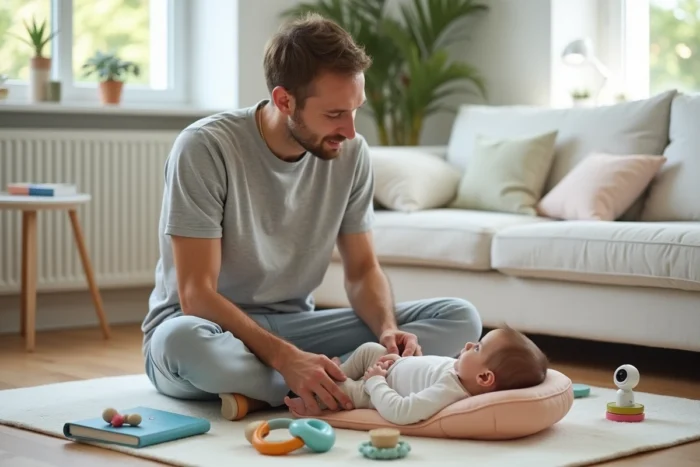
Second-hand in baby care: what sells well and what poses problems
The second-hand market for babies is becoming structured. Associations redistribute diapers, clothing, hygiene products, and equipment to families in need. For others, selling between individuals represents a major economic lever, provided they know what is suitable.
Equipment suitable for second-hand purchase
- Clothing from the first months, worn for just a few weeks, remains in near-new condition and is easily found in lots
- Bouncers, bathtubs, and high chairs experience little mechanical stress and remain reliable after several users
- Wooden or washable fabric sensory toys retain their sensory properties without notable degradation
Equipment to buy new or to check scrupulously
The car seat is the most critical case. After a collision, even a minor one, the internal structure may be compromised without visible signs. A second-hand car seat without a known history presents a real risk. The crib also deserves verification: the spacing between the bars must comply with current standards, and the fastening systems must show no play.
Compliance and labeling criteria evolve regularly. Equipment manufactured several years ago may no longer meet current requirements. Checking for the CE marking and the manufacturing date remains a basic reflex before any second-hand purchase.
Baby care and over-equipping: purchases that clutter more than they serve
Some products benefit from effective marketing but address needs that parents do not always encounter. The bottle warmer, diaper pail, and sterilizer are among the most regretted purchases according to feedback from parents shared online.
The bottle warmer can be replaced by a simple water bath or warm tap water. The diaper pail, despite its odor-control system, requires the purchase of dedicated refills throughout the diapering period. The sterilizer loses its usefulness as soon as the infant starts putting their hands and objects in their mouth, which happens well before the end of the first semester.
On the other hand, some modest purchases prove invaluable in daily life: a muslin swaddle (multi-use: blanket, sunshade, emergency bib), a reliable bath thermometer, or long-sleeved bibs for introducing solid foods.
Safety standards and labeling: what baby registries do not mention
Classic buying guides focus on comfort and design. Safety standards are, however, the primary selection filter for any equipment in direct contact with an infant.
The CE marking certifies compliance with European requirements, but it does not guarantee a high level of performance. Technical references evolve, particularly regarding materials in contact with the skin (textiles, food plastics) and the mechanical resistance of load-bearing structures.
- For a crib: check the spacing of the bars, the height of the adjustable mattress, and the absence of protruding screws
- For a car seat: ensure it corresponds to the child’s weight and height, not just their age
- For a baby carrier: check the head support and the physiological position of the hips (knees above the buttocks)
- For sensory toys: prefer products without small detachable parts, suitable for the indicated age range
Equipment that complies with standards protects better than expensive equipment without certification. Price does not automatically correlate with safety.
The world of baby care encourages accumulation. The first months of a baby are all about sleeping, eating, being carried, and being changed. Equipment that simplifies these four functions deserves a budget. The rest falls under optional comfort, to be assessed after birth, when the actual needs of the household become clearer.